Picnic Table Maintenance and Restoration
Practical instructions for keeping a Billabong Australian hardwood picnic table protected and looking its best.
The Timber Coating We Use
Every new Billabong table receives two coats of Preschem Aussie Clear. It is an Australian-made, non-film-forming penetrating oil designed for exterior timber. Because it penetrates rather than forming a surface film, it cannot peel or flake like varnish.
Preschem currently recommends Aussie Clear Light for lighter timbers such as Blackbutt and the original Aussie Clear for darker timbers including Ironbark. Check the current product information before choosing a coating.
We selected Aussie Clear after testing several finishes ourselves. We cut boards into short sections, applied the different products and left them exposed on the factory roof for three years. Aussie Clear performed best in our test.
How to Clean and Recoat the Table
- Inspect the timber. A faded or dry-looking surface may only need cleaning and a maintenance coat. Rough, silvered or badly weathered timber needs more preparation.
- Clean and dry it. Clean the surface thoroughly and allow it to dry completely. The timber must be dry and free from dirt, grease and wax.
- Prepare badly weathered areas. Sand rough or weathered timber back to a smooth, sound surface with 80-grit sandpaper, or use a suitable timber cleaner according to its directions. If pressure washing, use care to avoid gouging the timber and allow it to dry fully before sanding or coating.
- Apply one generous coat. Use the appropriate Aussie Clear product with a brush, roller or general-purpose sprayer. Do not apply it when rain or dew is expected.
- Remove excess oil. After approximately two hours, use a lint-free cloth to wipe away and work in any oil left pooling on the surface.
- Allow at least 48 hours before use. Drying time can vary with weather and application conditions. Follow the current product label and technical information.
If the Hardwood Stains Concrete, Slate or Pavers
Australian hardwood can release natural tannins when it first becomes wet. The marks can look unsightly, but they usually fade in sunlight over the following months. After the furniture has been through several rainfalls, most surface tannin will have leached out and the staining normally stops.
If staining is a concern, allow the furniture to weather on a surface that will not be affected before placing it over concrete, slate or pavers. Heavy sanding can expose fresh timber and cause tannin to leach again. We have even seen a 100-year-old fence post, recycled into a table leg, release tannin onto concrete. Kiln-drying and surface coatings do not necessarily eliminate it.
Maintenance and Restoration Gallery
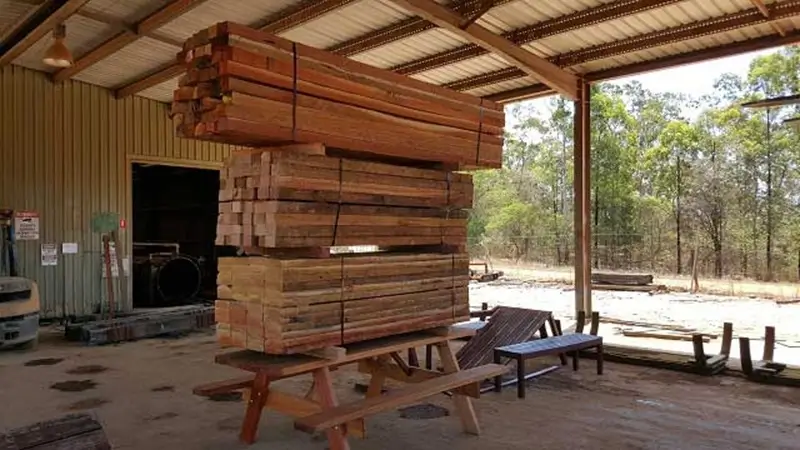
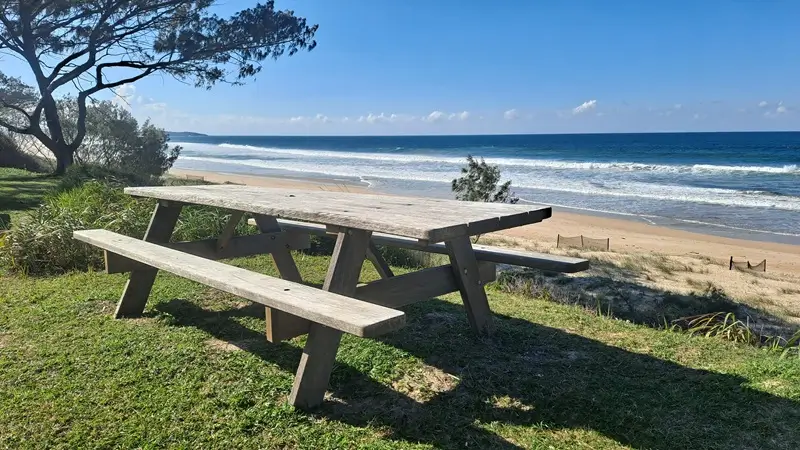
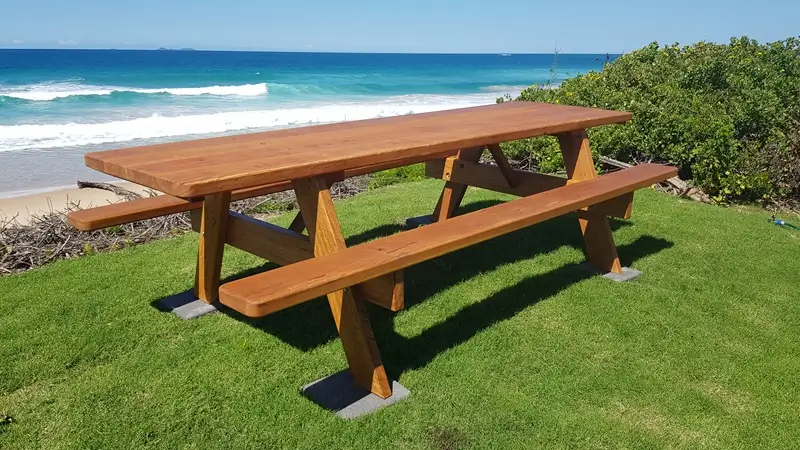
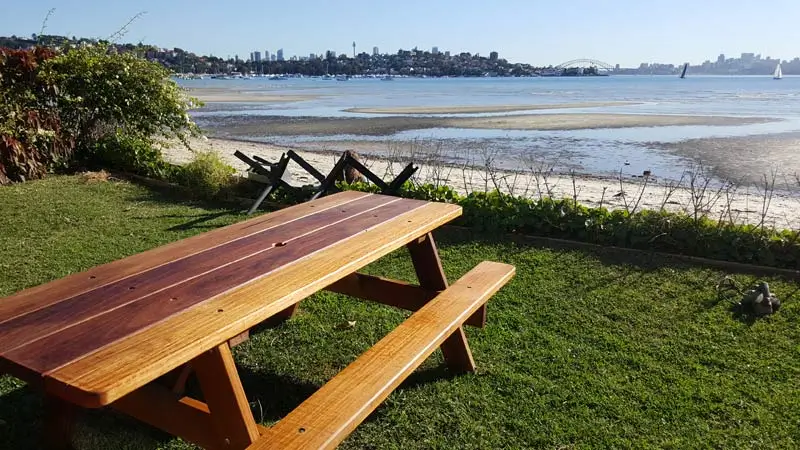
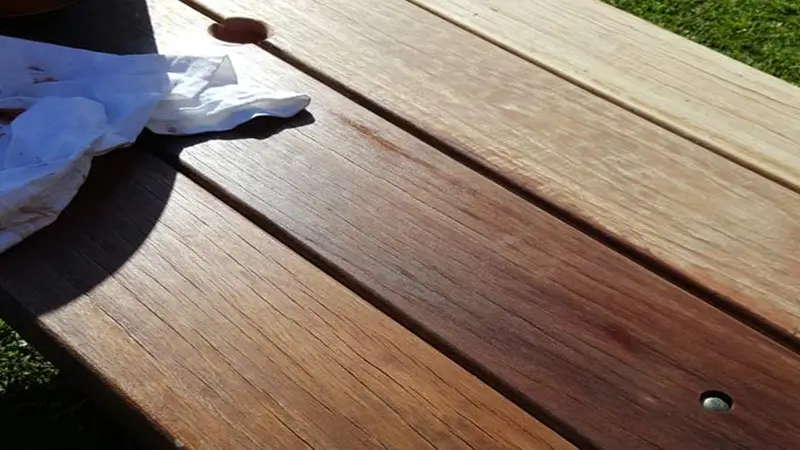
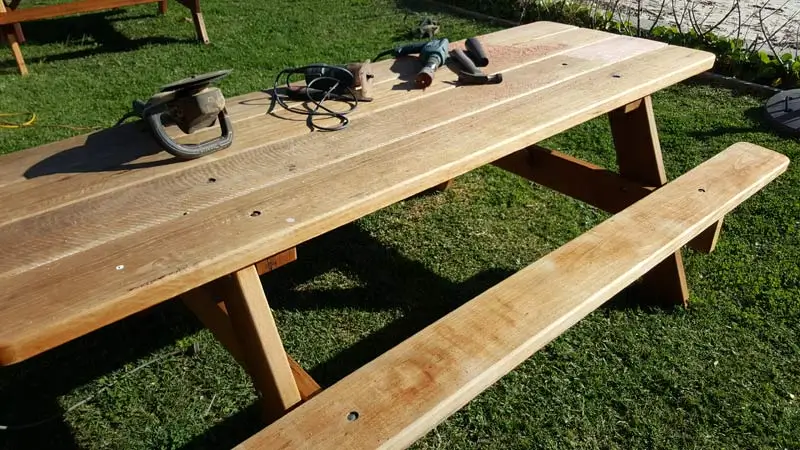
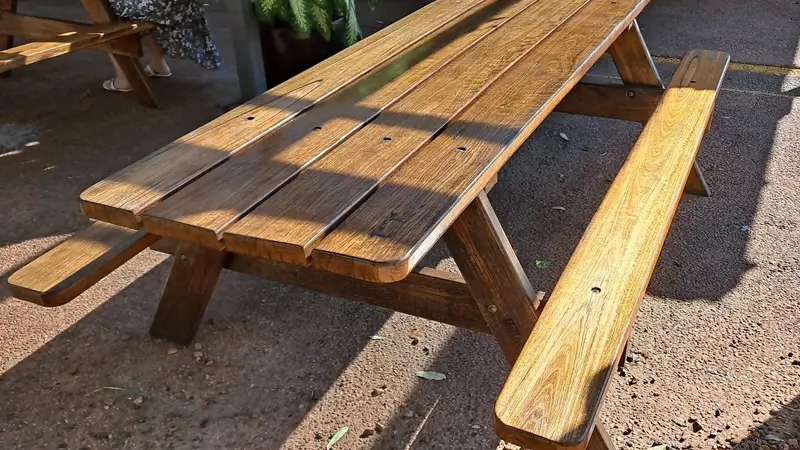
Billabong hardwood picnic tables before, during and after restoration.